

- Endodontic Surgery
- Impacted Teeth
- Implant
- Jaw Tumors
- Jaw Cysts
- Jaw Fractures
- Sinus Lifting and Alveolar Bone Operation
- Surgery Before Prosthesis
- TemPoromandibular Joint
- Moving Division Protheses
- Total Prosthesis
- Porcelain Teeth
- Porcelain Lamina
- Aesthetic Fillings
- Full Porcelain Restorations (Empress)
- Teeth Whitening
- Smile Design
- Zirconia Infrastructure Teeth
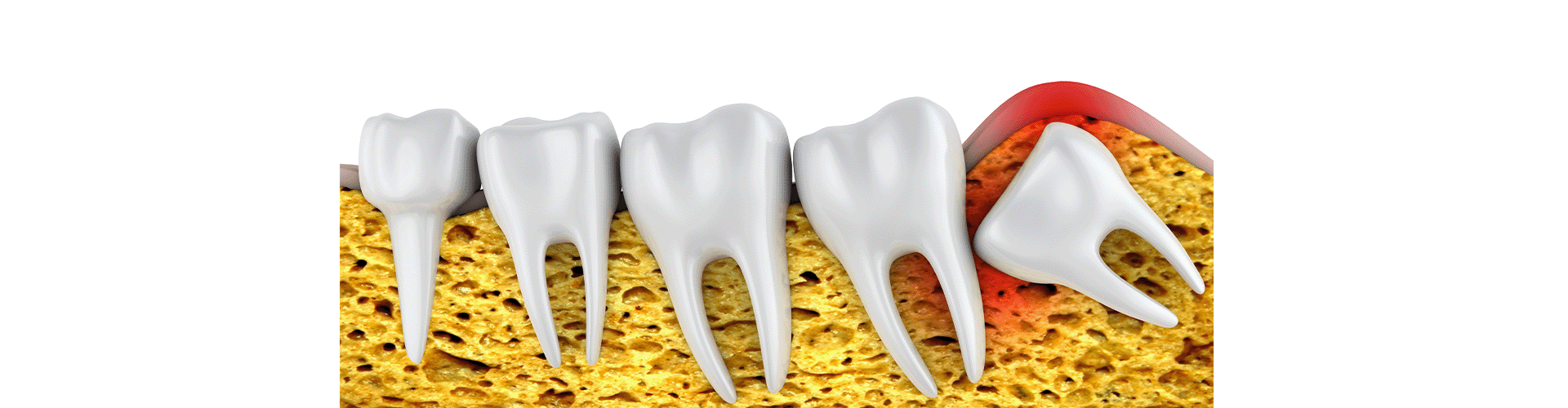
Impacted tooth means a tooth that has remained stuck in the gum even though it should erupt, and that cannot break through the gum. These teeth, which are mostly in the jawbone, cannot take the correct position and this brings various problems along with it. When it comes to this situation, wisdom teeth are one of the first things that spring to mind. The causes of impacted teeth vary.
What is Impacted Tooth?
It is defined as the teeth that remain in the gum even though it is time to erupt of the gum. Wisdom teeth and canines are the most common areas of impacted tooth problem. In some cases, orthodontic treatment can be the solution. However, if it is in a position to cause bigger problems and cannot be corrected with orthodontic intervention, the tooth should be extracted. For example, damaged impacted teeth that will damage other teeth need to be extracted.
Common Causes of Impacted Teeth
Impacted tooth symptoms and causes vary. It is mostly caused by problems with primary teeth (deciduous teeth). The most common causes are as follows:
The early loss of primary teeth prevents the development of the jawbone, so there is not enough space for the new permanent tooth to grow.
If primary tooth decays are not treated, the distance between the teeth will change and the space to be taken by the permanent tooth will be corrupted. In this case, even if the tooth erupts, crooked teeth (misaligned teeth) problem may occur.
If the primary tooth erupts from the gum early, the tooth around the cavity tend to move towards this empty space. Since there is no room left for the permanent tooth, these future teeth remain impacted.
If the deciduous teeth erupt early, the tissue on the cavity may harden and bone tissue may form. This blocks the eruption of permanent teeth.
In addition to milk tooth problems, anatomical issues, physical traumas, genetic factors, and oral infections can also cause impacted teeth conditions. For example, if the anatomical structure of the jaw does not suitable enough to match tooth alignment, the problem of impacted teeth may arise
Impacted Tooth Treatment
Before the treatment of impacted teeth, a doctor's examination and orthodontic tests are performed. As a result of the orthodontic evaluation, the treatment is applied. During the process, impacted tooth problems are treated, aesthetic problems are eliminated, and the functionality is restored to the tooth. Impacted tooth operations are performed under local anesthesia. Of course, the dentist and the patient may decide on different method.
Diagnosis, Treatment, and Healing Process for Impacted Tooth
If a primary tooth erupted early, it is useful to go to the dentist. If the tooth does not come out of the gingiva in its normal position, and if impacted teeth cause aesthetic and functional problems, it is recommended that you go to an orthodontist.
After tooth extraction, stitches are placed on the relevant area. Stitches are removed in 7 to 10 days. If necessary, the doctor may prescribe antibiotics and painkillers to the patient for the post-operative process. Thanks to the anesthesia methods, the patient does not feel pain during the operation.
After impacted tooth surgery, a tamp is applied on the extracted tooth area. This helps to stop the bleeding. Tamp application is completed after about 30 minutes. Patient must not spit or gargle during the first day. If necessary, ice compresses may be applied. Patients should not smoke or use alcohol for a certain period of time.